Top 10 Private Label Skin Care Trends for 2023 You Need to Know
The global private label skin care market has witnessed significant growth in recent years, driven by changing consumer preferences for customization and unique product formulations. According to industry reports, the market is projected to reach over $50 billion by 2025, with influencers and consumers increasingly favoring products that resonate with their individual needs. As a result, brands are tapping into private label skin care as a strategic avenue to attract and retain customers, leveraging the flexibility and cost-effectiveness that this model offers.
In 2023, emerging trends in private label skin care are shaping the industry's landscape, presenting opportunities for innovation and differentiation. As consumers become more educated and discerning, there is a growing demand for transparent labeling, sustainable ingredients, and ethically sourced materials. Furthermore, the rise of e-commerce has transformed the way brands connect with their audience, making online channels vital for private label launches. This introduction to the top trends in private label skin care will explore how these dynamics are influencing product development and marketing strategies, helping businesses navigate the rapidly evolving market environment.
Emergence of Clean and Sustainable Ingredients in Skin Care
The skincare industry is witnessing a significant shift towards clean and sustainable ingredients in 2023, driven by growing consumer awareness and demand for products that not only enhance beauty but also align with ethical standards. According to a report by Grand View Research, the global clean beauty market is projected to reach $22 billion by 2024, reflecting an increasing preference among consumers for safe, environmentally friendly ingredients. Brands that adopt clean formulations—those free from harmful chemicals—are not only catering to health-conscious consumers but also aligning with broader environmental sustainability campaigns.
Incorporating sustainable practices goes beyond ingredient selection; it encompasses the entire lifecycle of skincare products—from sourcing to packaging. A survey by Nielsen indicates that 73% of millennials are willing to pay more for products that are environmentally friendly, highlighting a significant opportunity for private label brands to innovate in this space. Emphasizing transparency and ethical sourcing standards can further inspire consumer trust and loyalty. As we progress through 2023, recognizing the dual importance of clean ingredients and sustainable practices will be pivotal for brands looking to stand out in a competitive marketplace.
Rise of Personalized Skincare Solutions through AI and Data
The skincare industry is witnessing a remarkable transformation with the rise of personalized solutions, largely fueled by advancements in artificial intelligence and data analytics. Consumers are now demanding products tailored to their unique skin types, concerns, and preferences. This shift is prompting brands to leverage AI technology to analyze vast amounts of data, including individual skin profiles and diagnostic results, to formulate products that cater specifically to each customer’s needs. By harnessing this technology, skincare companies can create highly personalized experiences that enhance customer satisfaction and loyalty.
Furthermore, AI-driven insights enable brands to predict emerging skincare trends and customer behaviors effectively. Through detailed analysis of consumer feedback and market trends, companies are equipped to refine their product offerings in real-time, ensuring they meet evolving demands. This data-driven approach not only facilitates the creation of bespoke formulations but also empowers brands to optimize their marketing strategies, engaging with consumers more meaningfully. As a result, the convergence of AI and skincare is setting a new standard in the beauty industry, making personalized skincare solutions a top trend for 2023.
Increased Demand for Gender-Neutral Skin Care Products
The demand for gender-neutral skin care products has surged in recent years, reflecting a broader shift towards inclusivity within the beauty industry. According to a report by Allied Market Research, the global gender-neutral beauty market is projected to reach $70 billion by 2024, growing at a CAGR of 5.3% from 2020. This trend signifies a shift away from traditional gendered marketing, as consumers increasingly seek products that cater to all skin types and concerns, regardless of gender.
The rise of gender-neutral skin care is largely driven by younger consumers, particularly millennials and Gen Z, who prioritize authenticity and representation in their purchasing decisions. A 2022 study by McKinsey & Company found that 62% of millennials are looking for brands that promote inclusiveness, and this preference is reshaping the landscape of skin care formulations. Brands are now focusing on unisex products that address a variety of skin concerns, such as hydration, repair, and protection. This shift not only opens up new market opportunities but also encourages brands to adopt more holistic approaches to skin care, emphasizing effectiveness over gender stereotypes.
Top 10 Private Label Skin Care Trends for 2023 You Need to Know
| Trend |
Description |
Market Demand (%) |
Target Demographic |
| Gender-Neutral Formulations |
Products designed for all genders, emphasizing inclusivity. |
35% |
Men and Women |
| Sustainable Packaging |
Eco-friendly materials that reduce waste and environmental impact. |
28% |
Eco-conscious Consumers |
| Natural Ingredients |
Focus on organic and naturally derived components. |
42% |
Health-conscious Individuals |
| Customization Options |
Products tailored to individual skin needs and preferences. |
30% |
Personalization Seekers |
| Transparency in Ingredients |
Clear labeling and information about product compositions. |
39% |
Informed Consumers |
| Technology Integration |
Incorporation of apps and devices for skin analysis and product selection. |
25% |
Tech-savvy Users |
| Inclusive Marketing |
Advertising strategies that appeal to diverse audiences. |
33% |
Diverse Demographics |
| Wellness Integration |
Skin care products that promote overall wellbeing. |
31% |
Health and Wellness Enthusiasts |
| Minimalist Formulas |
Products with fewer, but effective ingredients. |
27% |
Simplicity Seekers |
| Men's Skin Care Growth |
Significant increase in products specifically targeting men's skin care. |
40% |
Men |
Popularity of Multifunctional Products for Simplified Routines
The skincare industry is witnessing a significant shift towards multifunctional products, driven by consumers’ desire for simplified routines. According to a 2022 report from Grand View Research, the global skincare market is projected to reach $189.3 billion by 2025, with multifunctional products playing a crucial role in this growth. In an era where time is of the essence, skincare routines that streamline multiple benefits into a single product not only cater to consumer convenience but also align with the growing trend of minimalism in beauty.
As lifestyles become busier, consumers are gravitating towards products that deliver multiple results—such as moisturization, sun protection, and anti-aging benefits—all in one formulation. A study by Statista indicates that 43% of consumers prioritize efficiency in their skincare regimes, making multifunctional products an attractive option. This trend is particularly popular among younger demographics, who seek to reduce the number of products they apply daily, thus simplifying their routines without compromising effectiveness.
Furthermore, the rise of multifunctional skincare aligns with an increasing awareness of ingredient efficacy and transparency. Consumers are becoming more educated about what their skincare products contain, leading to a demand for formulations that not only serve multiple purposes but also incorporate clean, sustainable ingredients. This shift reflects a deeper understanding of skincare science, where consumers are not only looking for convenience but also for products that promote overall skin health.
Focus on Inclusive Marketing Tailored to Diverse Consumer Needs
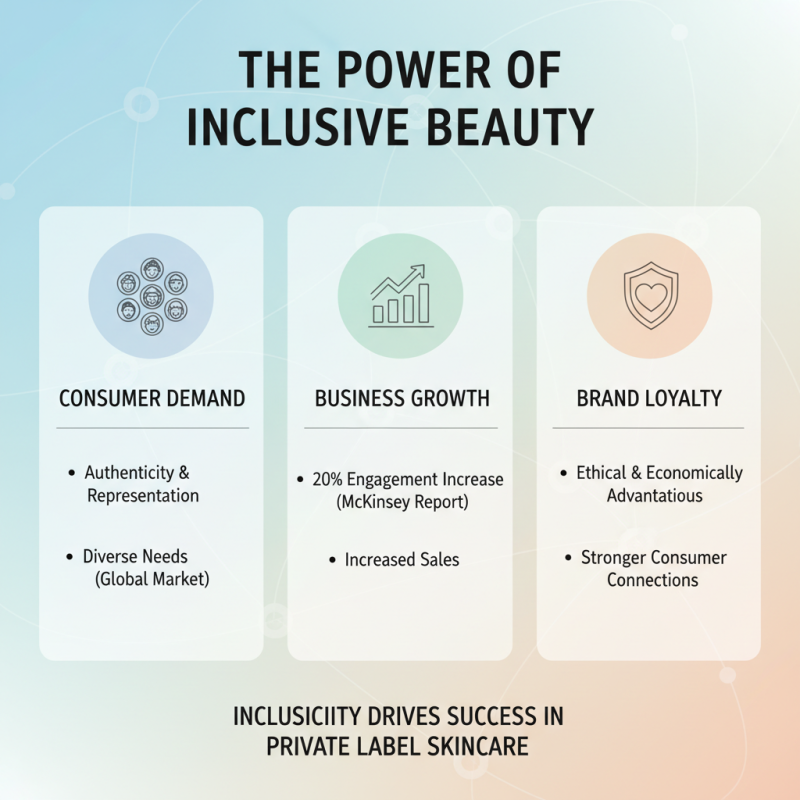
Inclusive marketing is becoming increasingly essential in the beauty industry, particularly in private label skin care. As consumers demand authenticity and representation, brands must tailor their products to meet the diverse needs of a global market. According to a recent report by McKinsey, companies that embrace diversity in their marketing strategies see a 20% increase in engagement compared to those that do not. This trend is not just ethical; it’s also economically advantageous, demonstrating that inclusivity can lead to better brand loyalty and increased sales.
To capitalize on this trend, brands should conduct thorough market research to understand the specific skin care concerns of various demographics. For example, darker skin tones may require different formulations for hyperpigmentation, while aging populations might prioritize hydrating and anti-aging ingredients. Collaborating with multicultural influencers can also provide insights into the preferences of different consumer groups, ensuring that product messaging resonates with a wider audience.
Tips: Create campaigns that showcase real customers of diverse backgrounds using your products. Also, consider developing a comprehensive FAQ section on your website that addresses unique skin care challenges related to various ethnicities. Engaging with consumers through regular feedback loops can also help brands refine their offerings and marketing strategies to better reflect the needs of their audience.