
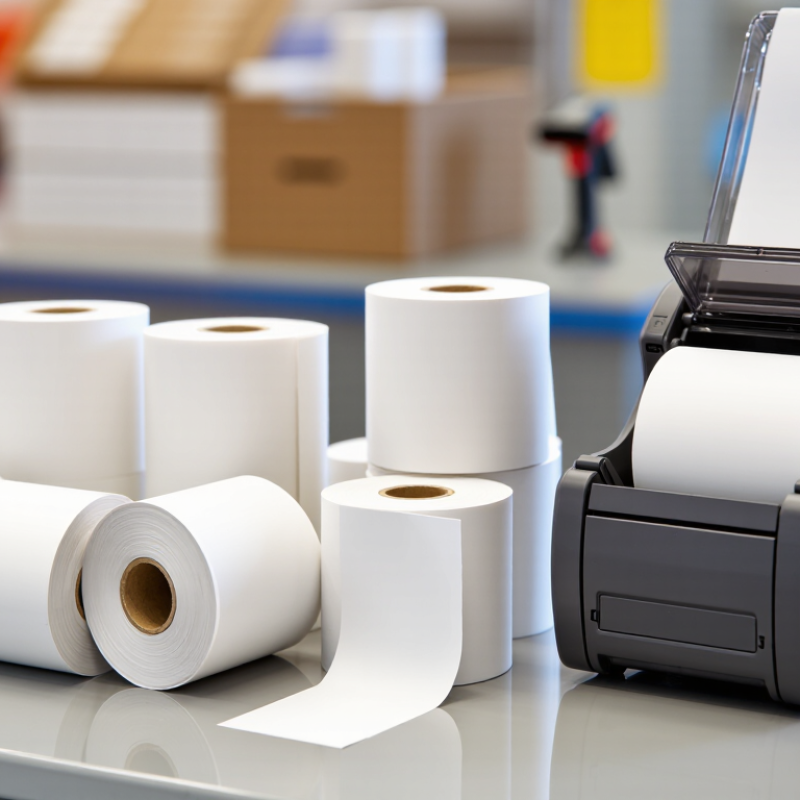
5 Tips for Buying 3 1/8 Inch Thermal Paper
A 3 1/8-inch roll usually measures 80 mm wide, but width alone does not ensure reliable printing. Check the paper specification sheet for grammage and caliper. ISO 534 defines methods for measuring paper thickness and grammage. In practice, many receipt rolls use approximately 48–80 gsm stock. Heavier paper feels stronger, yet it may reduce the number of receipts per roll. Handle both samples. That small test often reveals more than packaging claims.
Brightness affects contrast, but extreme whiteness is not automatically better. ISO 2470-1 measures paper brightness through blue-light reflectance. Ask for the tested brightness value and compare samples under the same lighting. A dull gray background can make small characters difficult to scan. A glossy surface may look impressive, but fingerprints and glare can reduce readability. I once judged paper by appearance alone. That was not a smart test.
Print durability needs practical evidence. The ISO 11798 permanence framework evaluates printed information after controlled aging, although thermal receipts face different heat and light conditions. Store a printed sample near a window, inside a warm vehicle, and in a wallet for several weeks. Compare faded text, gray smearing, and barcode clarity. Test ten consecutive rolls, not one lucky roll. Ask whether the coating prints evenly at your machine’s normal speed and temperature. Data sheets help, but real operating conditions still expose weaknesses.