What Is the Difference Between Card and Board Games?
What Is the Difference Between Card and Board Games?
Card games and board games often share the same table, players, and competitive energy. Yet, their physical designs create different experiences. Card games mainly use decks, hands, draws, and discards. Board games usually add a map, track, grid, tokens, or miniatures. A deck can fit inside a coat pocket. A board may need an entire dining table.
Game design scholar Scott Nicholson explains, “Games are designed to create an experience for players.” This idea helps us look beyond components. A card game may create tension through hidden information and sudden draws. A board game may create tension through visible territory, movement, and long-term planning. However, the distinction is not perfectly clean. Games such as Monopoly Deal, Gloomhaven, and card-driven war games combine both formats. Labels can become confusing.
A practical comparison should examine how players interact with the game. Do they mainly manage cards, or do they control space on a board? How much information remains hidden? Does the game depend on physical positioning? These questions reveal more than the box title. Card Board Games may include either format, or a hybrid design that borrows from both. The phrase can describe a broad industry rather than one strict category.
Even this framework has limits. Some compact games feel strategically deeper than large board games. Some card games use boards, while some board games barely use one. That is the interesting part. The difference is useful, but never absolute. Understanding the overlap can help buyers, retailers, and designers choose games more accurately.
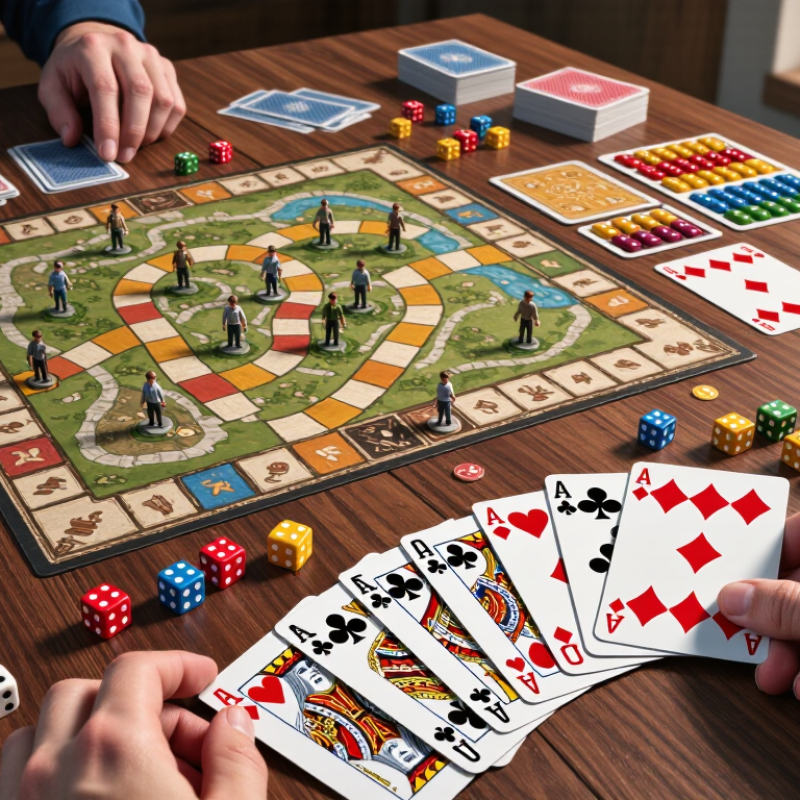
Definitions and Core Features of Card Games and Board Games
What Is the Difference Between Card and Board Games?
Definitions and Core Features of Card Games and Board Games
A card game uses cards as its main information system. Cards may show actions, points, characters, or hidden objectives. Players usually draw, hold, reveal, trade, or discard them. Luck often comes from the deck, while skill shapes timing and decisions. A board game normally uses a shared surface, marked spaces, tokens, or pieces. Players move across a visible landscape and follow spatial rules. Some games combine both formats, so the boundary is not perfectly clean.
Core features matter more than the box shape. Card games often create tension through limited hands and changing card order. Board games often emphasize position, routes, territory, or resource management. In practical playtesting, clear iconography reduces pauses and rules disputes. Physical design also affects accessibility, especially for children or players with limited dexterity. Grand View Research estimates that the global board games market will continue growing through 2030. Its 2024 market analysis connects this growth with social play and improved home entertainment. Kickstarter’s 2023 annual data also recorded more than 220 million dollars pledged in its Games category. That figure reflects platform activity, not the entire tabletop market.
Tips: Choose a card game for quick setup and compact storage. Choose a board game when movement and shared space matter. Check playtime, reading load, and player count before buying. The “best” format depends on the experience you want. That part is easy to overlook.
How Game Components Shape the Playing Experience
The difference between card and board games often begins with their components. Cards compress rules, choices, and hidden information into a portable format. A board creates shared geography, visible objectives, and physical distance between players. Grand View Research’s 2024 Board Games Market report valued the global market at about $12 billion in 2023. It also projected strong growth through 2030. That expansion suggests players still value tangible systems, not only digital convenience.
Components shape behavior at the table. A card can force a quick decision, while a board can make strategy unfold slowly across a map. Tokens show ownership. Dice add uncertainty. Player boards reduce memory demands and keep resources visible. Small pieces matter. In my own playtesting, thick cards improved handling, but excessive tokens caused confusion. I initially treated component quality as decoration. That was a mistake. It changes speed, accessibility, and even social tension. The Toy Association’s 2024 trend reporting, based on industry sales analysis, identified games and puzzles as resilient toy categories, reflecting continued interest in shared play. Yet sales data cannot measure every experience. A beautiful board may still create long pauses. A simple deck may produce sharper interaction. The best design matches each component to the decision it supports, while leaving enough space for players to question the rules and each other.
Comparing Setup, Playing Time, and Learning Difficulty
What Is the Difference Between Card and Board Games?
Comparing setup, playing time, and learning difficulty reveals their practical differences. In my experience, card games usually need less table space. A shuffled deck, a few tokens, and clear seating may be enough. Setup often takes under five minutes. Board games can require maps, boards, pieces, cards, and player aids. Arranging everything may take fifteen minutes or longer. That preparation can feel satisfying, but it can also delay the actual play.
Playing time varies widely. Many card games fit comfortably into a short break. A round may finish within twenty minutes. Board games often create a longer, more structured session. Some end in forty minutes, while others continue for several hours. Learning difficulty is less predictable. A small deck can hide complex timing rules. A large board can look intimidating but teach gradually. Clear examples and supervised practice usually matter more than the game’s format. I have misjudged both types before.
Tips: Check the setup time before inviting casual players. For beginners, explain one turn at a time. Use visible reference cards. Keep the first session short when possible. If players seem confused, pause and replay an example. Rules are not always as clear as their writers expect.
Choosing Between Card Games and Board Games for Different Players
What Is the Difference Between Card and Board Games?
Choosing Between Card Games and Board Games for Different Players
Card games and board games create different experiences, even when both use simple rules. Card games usually need less space and offer faster setup. A deck fits easily in a drawer or travel bag. Players can begin within minutes. This suits busy adults, casual groups, and families with limited table space. Card games also encourage quick decisions. A player may hold only a few options, making every choice feel visible and immediate.
Board games often provide a larger shared world. The board may show roads, rooms, territories, or colorful tracks. Pieces move across physical spaces, so younger players can understand progress more easily. From a design perspective, boards support longer planning and stronger visual storytelling. They can work well for patient players, strategy lovers, and groups that enjoy regular sessions. However, setup may take ten minutes or more. That delay can test a tired group.
I once chose a complex board game for friends who preferred relaxed conversation. That assumption was wrong. A short card game suited them better, although the repeated rounds became predictable later. Player personality matters more than age alone. Competitive players may enjoy either format, while beginners often need clear turns and limited choices. Consider attention span, table space, reading ability, and tolerance for waiting. Try both formats. The better choice can change with the evening.
Card Games vs. Board Games: Choosing by Player Needs
Relative suitability scores from 1 (lower) to 5 (higher), based on common characteristics of each game format.
Card games usually perform better when players want portability, fast setup, and shorter sessions. Board games generally provide more physical components, structured strategy, and stronger support for longer shared play. Actual experiences vary by individual game and player group.