
Cosmetic Group USA
10 Cosmetic Makeup Sourcing Tips for Global Buyers
Sourcing cosmetic makeup for global markets demands more than comparing prices on a supplier spreadsheet. A reliable product must perform well, arrive safely, and meet the expectations of different customers. Buyers often examine shade consistency, texture, ingredient transparency, packaging quality, and production capacity before placing an order. Small details matter. A leaking mascara tube can damage cartons, delay launches, and weaken retailer trust.
This guide presents ten practical cosmetic makeup sourcing tips for international buyers. It focuses on supplier verification, sample testing, ingredient documentation, minimum order quantities, lead times, and quality control. Request current ingredient lists, certificates of analysis, manufacturing information, and clear product specifications. Independent testing may also help confirm safety, stability, microbiological quality, and color consistency. Requirements vary by destination, so buyers should obtain qualified regulatory advice for each target market.
Experience can reveal problems that polished presentations hide. A factory may provide beautiful samples but struggle with repeat production. A low quotation may exclude testing, custom packaging, or shipping preparation. Even experienced buyers sometimes overlook communication speed and corrective-action procedures. That mistake is costly. Keep written records, approve a reference sample, and define inspection points before production begins. Sustainable packaging deserves careful review too, because attractive claims may not match actual materials or disposal systems. These recommendations are not a shortcut to certainty. They create a stronger process for asking better questions, reducing avoidable risk, and building dependable supplier relationships.
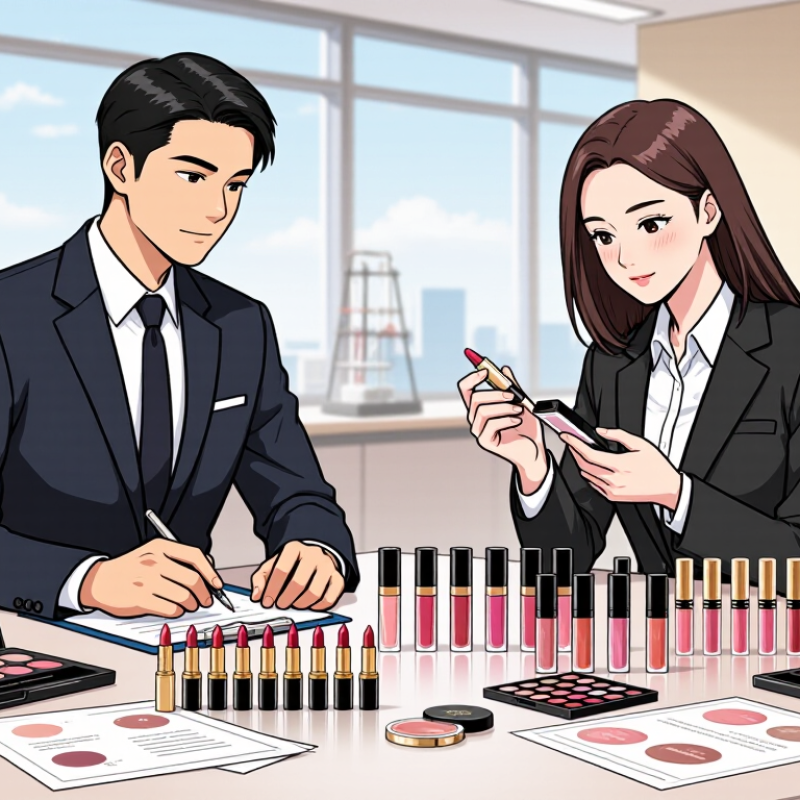
Defining Product Requirements and Target Markets
A reliable makeup sourcing project starts with a precise product brief. Define shade range, undertone, finish, coverage, wear time, packaging, target cost, and minimum order quantity. Add measurable standards, such as eight-hour wear or transfer resistance. Vague requests create expensive revisions.
The target market must shape every detail. Climate affects texture and packaging stability. Local skin tones influence shade development. Consumer income affects acceptable pricing and pack size. McKinsey’s “The Beauty Market in 2023” projects the global beauty market could reach about 580 billion dollars by 2027. Growth is strong, but buyer expectations differ sharply across regions. A lightweight base may suit humid cities, while richer formulas may perform better in dry climates. Do not treat one market as universal.
Use regional research before contacting factories. Review retail prices, search behavior, customer reviews, and category growth. NIQ’s State of Beauty 2024 report identified continued global beauty growth and strong online purchasing momentum. That supports digital testing, but online interest does not guarantee repeat purchases. Build sample panels with varied skin tones and ages. Record oxidation, creasing, scent, and application time. Supplier questions should cover batch consistency, testing records, lead times, and corrective actions.
I have learned that the first brief is rarely right. Some performance claims sound attractive but lack practical testing. Leave room for reformulation. A cheaper component may also damage the user experience. Small pilot orders expose these weaknesses before larger commitments.
10 Cosmetic Makeup Sourcing Tips for Global Buyers - Defining Product Requirements and Target Markets
| No. | Sourcing Focus | Product Requirement to Define | Target-Market Consideration | Recommended Specification or Checkpoint | Useful Evidence | Priority |
|---|---|---|---|---|---|---|
| 1 | Define the Customer Profile | Specify age range, skin concerns, makeup habits, preferred finish, price sensitivity, and purchase channel. | Consumer preferences differ by climate, culture, income level, and local color preferences. | Create one primary buyer persona and identify the occasions of use, such as daily wear, professional use, or special events. | Market survey, customer interviews, search data, and pre-order feedback. | High |
| 2 | Set the Shade Range | Define shade count, undertones, depth range, naming conventions, and acceptable batch-to-batch color variation. | Foundation and concealer ranges should reflect the skin-tone diversity of the intended market. | Use standardized shade samples and approve a physical master standard before mass production. | Approved color chips, spectrophotometer readings, and signed shade approval records. | High |
| 3 | Choose the Formula Type | Define texture, coverage, finish, wear time, transfer resistance, water resistance, fragrance level, and skin-feel expectations. | Hot or humid markets may require stronger stability and wear performance; dry climates may favor emollient textures. | State measurable targets such as viscosity range, pH where applicable, coverage level, and minimum wear-performance period. | Product brief, laboratory test results, stability data, and approved pilot samples. | High |
| 4 | Confirm Ingredient Boundaries | List restricted, prohibited, allergenic, animal-derived, palm-derived, or fragrance ingredients that must be avoided or disclosed. | Ingredient restrictions and disclosure rules vary between jurisdictions and may change over time. | Request the complete ingredient list using International Nomenclature of Cosmetic Ingredients (INCI) names and review it for every destination market. | Full INCI list, allergen statement, raw-material declarations, and regulatory review. | High |
| 5 | Map Regulatory Requirements | Define the required product dossier, safety assessment, claims substantiation, labeling, registration, and responsible-party information. | Requirements differ by destination. For example, the European Union requires a responsible person and product safety documentation, while the United States has federal cosmetic requirements and additional obligations under MoCRA. | Prepare a separate compliance checklist for each country or customs territory before placing the purchase order. | Regulatory gap assessment, safety report, product information file, and label review. | Critical |
| 6 | Specify Packaging Performance | Define package material, fill volume, closure type, applicator, leakage tolerance, decoration method, and recyclability goals. | Packaging must withstand the expected temperature, humidity, transport conditions, and retail handling environment. | Conduct compatibility, drop, leakage, torque, vibration, and transport simulation tests appropriate to the package. | Packaging specification, compatibility report, transport test results, and approved artwork proof. | High |
| 7 | Establish Quality Standards | Define acceptable limits for appearance, odor, fill weight, shade, viscosity, microbiological quality, and package defects. | The same quality standard should apply across production lots and sales channels. | Use a written quality agreement with sampling plans, acceptance criteria, batch-release requirements, and corrective-action procedures. | Certificate of analysis, batch records, inspection report, and retained samples. | Critical |
| 8 | Plan Order Economics | Define target cost, minimum order quantity, forecast volume, tooling charges, sampling fees, payment terms, and landed-cost assumptions. | Import duties, taxes, freight, currency changes, and local fulfillment costs can materially affect the final selling price. | Compare total landed cost rather than factory price alone and model at least three demand scenarios. | Quotation comparison, landed-cost worksheet, sales forecast, and purchase-order terms. | High |
| 9 | Validate Claims and Positioning | Define permitted claims such as long-wear, moisturizing, transfer-resistant, vegan, or sensitive-skin suitability. | Claims must be truthful, supportable, and presented in the language and format required by each target market. | Separate cosmetic claims from drug or therapeutic claims and approve every claim before artwork printing. | Claim-substantiation file, laboratory data, consumer-use testing, and final label approval. | High |
| 10 | Build a Market-Entry Test Plan | Define pilot quantity, test duration, key performance indicators, return criteria, and the process for collecting customer feedback. | A controlled pilot helps verify product-market fit before committing to a large inventory position. | Track conversion rate, repeat purchase, return rate, complaint rate, shade requests, and sell-through by channel. | Pilot report, customer feedback log, sales dashboard, complaint records, and revised product brief. | Medium |
Related Posts
-
What Is the Best Makeup Line Manufacturer in China?
-
Why Choose a Private Label Makeup Line?
-
What is Cosmetic Makeup? Understanding Types, Techniques, and Uses
-
China Top 10 Cosmetics Manufacturers for Global Buyers
-
How to Make Cosmetics for Global Markets in 2026?
-
How to Start a Makeup Line and Find Reliable Suppliers?