Top 10 Best Small Umbrellas for Travel and Rainy Days
Rain can turn a pleasant journey into a search for shelter within minutes. A compact umbrella must fit beside a passport, open quickly, and survive sudden gusts. The best Small Umbrella choices balance portability, canopy coverage, frame strength, drying time, and repairability.
Market research shows why this category deserves closer attention. Fortune Business Insights valued the global umbrella market at approximately $7.68 billion in 2023. Its report projects continued growth through 2030, supported by urban travel, changing weather patterns, and demand for convenient personal protection. Grand View Research also identifies compact, lightweight designs as important products within the wider umbrella market. These figures describe market momentum, not guaranteed quality.
Senz Umbrellas co-founder Gerwin Hoogendoorn has said, “The wind is not the enemy; bad design is.” That principle remains useful when comparing travel models. A narrow handle may save space, but it can feel unstable on wet pavements. A ten-rib frame may resist bending, yet add noticeable weight. Details matter.
This guide examines ten Small Umbrella options for travel and rainy days. Each selection considers real carrying conditions, including crowded trains, narrow luggage pockets, slippery sidewalks, and short hotel drying periods. No ranking is perfect. Price changes, regional availability, and personal hand strength can alter the result. A compact umbrella that works beautifully for one traveler may feel frustrating to another. The goal is practical judgment, not exaggerated certainty.
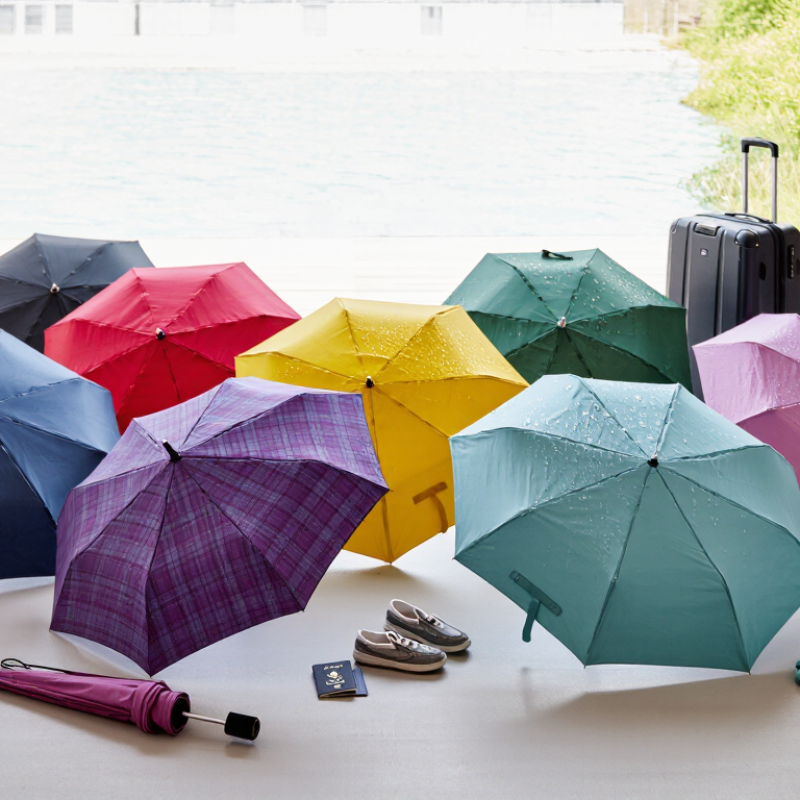
What Makes a Small Umbrella Suitable for Travel
A travel-suitable small umbrella should disappear into a day bag without becoming a burden. I look for a folded length under 30 centimetres and a weight that feels easy beside a phone and wallet. A slim sleeve also matters because wet fabric can soak notebooks or clothing. Not every compact model is equally practical. Some use tiny handles that feel awkward after ten minutes of walking.
Wind resistance deserves careful attention. A lightweight frame should flex slightly instead of snapping under sudden gusts. Eight or more connected ribs can improve stability, but rib count alone proves little. The canopy should open smoothly with one hand and lock securely. I prefer a manual opening system when reliability matters, because fewer moving parts usually mean fewer failures. It should also dry quickly after use. Nylon or polyester fabric with a dense weave can shed rain effectively, though no small umbrella stays perfectly dry in heavy weather. That is the honest limitation.
Small details shape real travel experience. A rounded handle feels better on crowded streets and train platforms. A wrist strap prevents accidental drops when tickets are being checked. I once chose the smallest umbrella available and regretted it; the canopy barely covered my shoulders. Compactness is useful, but coverage still needs balance. Check the closed dimensions, canopy diameter, frame material, and warranty terms before buying. Ratings help, yet personal use can reveal weaknesses that specifications miss.
Top 10 Small Umbrellas for Travel and Rainy Days
Choosing among the top 10 small umbrellas for travel and rainy days depends on more than folded size. A reliable shortlist includes a lightweight manual umbrella, a wind-vented umbrella, a reinforced-frame model, a reverse-folding design, an automatic compact umbrella, a sun-and-rain umbrella, a water-resistant canopy, a large mini umbrella, a travel umbrella with a wrist strap, and a slim umbrella for daily commuting. Each option solves a different problem. Manual designs usually weigh less and have fewer parts to fail. Vented canopies release pressure during sudden gusts. Reinforced frames offer better support, but they may feel heavier in a suitcase. I have found that a 90-centimeter canopy protects one person better than many ultra-small models.
Measure the closed length before packing. It should fit beside a passport pouch or laptop charger. Check the ribs, shaft, handle grip, and stitching carefully. A loose rib can become annoying after only a few rainy walks. A quick shake also reveals whether the canopy opens smoothly. Automatic umbrellas feel convenient at train stations, although their mechanisms need gentler handling. Reverse-folding umbrellas can keep wet fabric contained, but they often take longer to dry. My own ranking is not perfect, because wind, luggage space, and hand strength change the result. Small details matter. Leave it open indoors to dry fully, and avoid storing it while damp.
Top 10 Best Small Umbrellas for Travel and Rainy Days - Top 10 Small Umbrellas for Travel and Rainy Days
| Rank | Umbrella Type | Folded Length | Open Diameter | Weight | Canopy Material | Opening | Wind Design | Best For |
| 1 | Ultra-Compact Manual Umbrella | 15.5 cm / 6.1 in | 90 cm / 35.4 in | 185 g / 6.5 oz | Polyester | Manual | Flexible fiberglass ribs | Small bags and light travel |
| 2 | Compact Automatic Umbrella | 28 cm / 11.0 in | 98 cm / 38.6 in | 330 g / 11.6 oz | Polyester | Automatic open and close | Eight fiberglass ribs | Daily commuting |
| 3 | Wind-Resistant Travel Umbrella | 30 cm / 11.8 in | 105 cm / 41.3 in | 365 g / 12.9 oz | Recycled polyester | Manual | Vented double canopy | Exposed coastal and urban areas |
| 4 | Mini Pocket Umbrella | 17 cm / 6.7 in | 88 cm / 34.6 in | 160 g / 5.6 oz | Polyester | Manual | Flexible aluminum and fiberglass frame | Emergency rain protection |
| 5 | Large-Canopy Compact Umbrella | 32 cm / 12.6 in | 118 cm / 46.5 in | 430 g / 15.2 oz | Polyester | Automatic open | Reinforced fiberglass ribs | One-person coverage with a backpack |
| 6 | Sun-and-Rain Travel Umbrella | 27 cm / 10.6 in | 96 cm / 37.8 in | 285 g / 10.1 oz | Coated polyester | Manual | Fiberglass ribs | Mixed-weather trips |
| 7 | Two-Person Compact Umbrella | 31 cm / 12.2 in | 120 cm / 47.2 in | 445 g / 15.7 oz | Polyester | Manual | Eight reinforced ribs | Couples and shared walking |
| 8 | Lightweight Carbon-Frame Umbrella | 25 cm / 9.8 in | 100 cm / 39.4 in | 205 g / 7.2 oz | Polyester | Manual | Carbon-fiber shaft and fiberglass ribs | Air travel and carry-on luggage |
| 9 | Reflective Safety Travel Umbrella | 29 cm / 11.4 in | 103 cm / 40.6 in | 320 g / 11.3 oz | Reflective polyester | Automatic open | Fiberglass ribs | Walking in low-light conditions |
| 10 | No-Frills Basic Travel Umbrella | 24 cm / 9.4 in | 94 cm / 37.0 in | 250 g / 8.8 oz | Polyester | Manual | Aluminum shaft with fiberglass ribs | Occasional rainy-day use |
Measurements are listed in both metric and imperial units. Actual dimensions and weight may vary slightly by production batch and accessories.
How to Choose the Right Umbrella for Your Travel Needs
Choosing a travel umbrella starts with your daily route, not its appearance. Measure your bag before buying, because a compact umbrella can still waste valuable space. A closed length near 25 centimeters usually fits beside a tablet or water bottle. Weight matters on long walking days. Anything under 400 grams feels easier to carry.
Check the canopy diameter when it is open. A small canopy suits one person, but a wider design protects your shoulders and camera bag better. Look for reinforced ribs, a firm shaft, and a handle that remains comfortable when wet. Manual opening often has fewer parts to fail. Automatic opening is convenient, though the mechanism may become unreliable after rough handling. Test it several times before traveling.
Wind changes the decision. A vented canopy can reduce pressure, but no small umbrella should be treated as storm equipment. I once chose the lightest model and regretted it after one windy afternoon. It folded neatly, but its narrow canopy soaked my backpack straps. That experience changed my priorities. I now carry a simple sleeve, check the forecast, and avoid opening an umbrella near crowded doorways. Let it dry fully before packing it away. Small details matter. A comfortable grip, smooth closing action, and visible stitching can make rainy travel less frustrating. Recheck the frame after every trip, because tiny bends are easy to miss.
Care and Storage Tips for Compact Umbrellas
A compact umbrella needs care after every wet journey. I learned this after finding rust stains on a suitcase lining. Let the canopy open fully in a bathroom or shaded balcony. Keep it away from strong heaters, hair dryers, and direct midday sun. Excess heat can weaken fabric coatings and warp the frame. Shake off large drops, then wipe the handle and metal shaft with a soft cloth. Leave it open until no cool dampness remains. This may take several hours.
Check the ribs, joints, and runner before folding the umbrella. Small grit can make the sliding mechanism stiff. A clean, dry toothbrush removes debris from narrow gaps. Do not force a crooked rib back into place. I once pressed too hard and made a minor bend worse. A repair shop may offer safer advice for valuable or heavily used umbrellas. Avoid applying household oil unless the manufacturer specifically permits it. Oil can stain fabric and attract dust.
Store the umbrella loosely closed in its sleeve, not compressed under shoes or books. The sleeve should also be dry. In a travel bag, place the umbrella near the outer edge for quick access. Keep it separate from clothing if rain is still trapped inside. Inspect it every few weeks during rainy seasons. Look for loose stitching, cracked plastic tips, or a handle that feels unstable. Replace damaged parts when practical, because a sudden failure can leave you soaked.